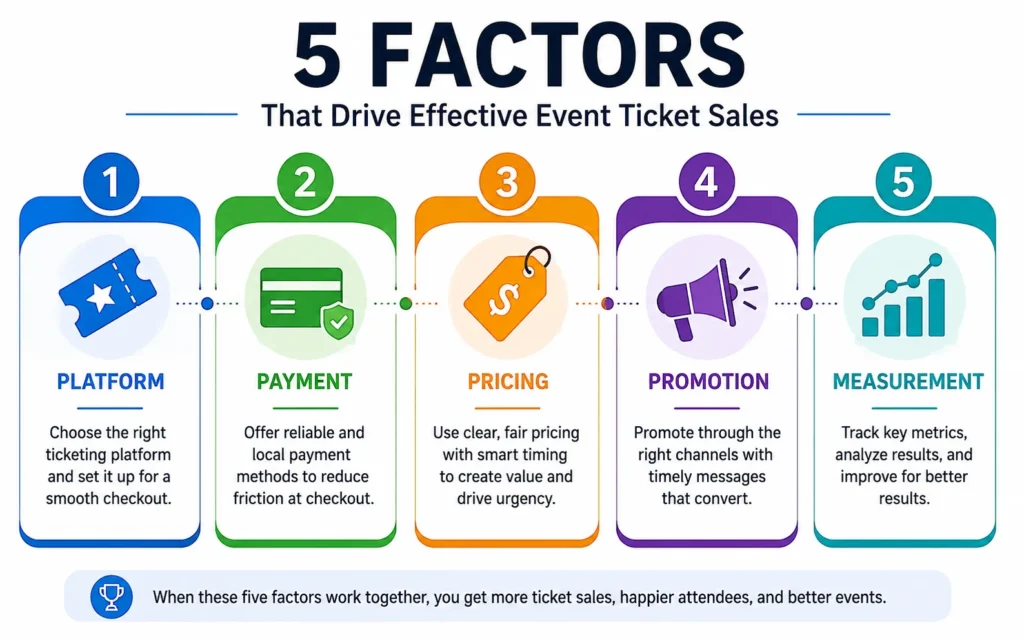
If you’re trying to figure out what makes gamification summit ticket sales effective, the honest answer is: no single trick does it. Effective ticket sales come from a handful of decisions working together — the right platform, sensible pricing, clear promotion, and a checkout process that doesn’t lose buyers halfway through. This guide walks through what actually moves the needle, based on the research and testing covered across this blog.
This is the hub article for our Ticket Sales Strategy section — each area below gets a brief overview here, with dedicated deep-dive guides on specific topics being added over time.
Why This Matters More for Gamification Summits Specifically
Gamification-focused events sit in an unusual spot. The audience attending them is, by definition, already familiar with concepts like points, badges, leaderboards, and progress mechanics — which means they tend to notice, and judge, when an event’s own ticket sales process feels clunky or doesn’t practice what it preaches. An event about gamification that has a confusing, unengaging registration flow sends a mixed signal before the event has even started.
This doesn’t mean every registration flow needs gamified elements bolted on. It means the basics — clarity, smooth checkout, honest pricing — matter even more here, because this particular audience is more likely to notice when they’re missing.
Start With the Right Platform and Setup
Before pricing or promotion matters at all, buyers need a smooth place to actually buy the ticket. A confusing or slow checkout page will undercut even the best pricing strategy. We’ve covered platform selection and setup in detail in our Ticket Platforms guide — if that part of your setup isn’t solid yet, start there first.
Getting Paid Without Friction
Once a buyer commits to paying, the payment step itself needs to work reliably. For gamification summits with a Southeast Asian audience specifically, this often means supporting the right local payment methods — something we cover in our Xendit setup guide.
Pricing and Timing Methods
How and when you price tickets has a direct effect on sales. A few methods commonly used for event ticket sales:
- Early-bird pricing — a lower price for a limited window, which rewards buyers who commit early and creates a natural sense of urgency
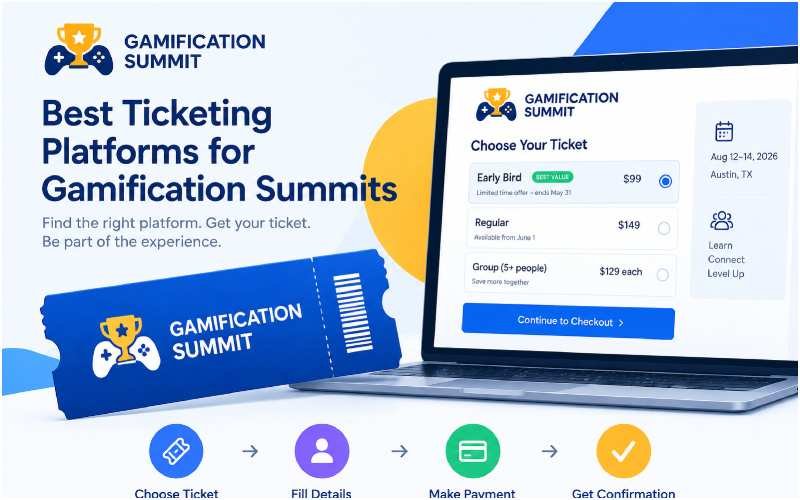
- Tiered pricing — General Admission, VIP, and Group rates, giving buyers options at different price points
- Time-limited windows — setting sale start/end dates that create real urgency rather than an always-available price
A practical note worth adding here: pricing tiers only work if the value difference between them is genuinely clear. A VIP tier that costs 3x more but only adds a slightly better seat tends to underperform, while one that adds something tangible and visible — early access, a small-group session, direct interaction with speakers — tends to convert better. The tier needs to be easy to explain in one sentence; if you find yourself needing a paragraph to justify a price difference, that’s usually a sign the tier itself needs rethinking, not the explanation.
We’ll be publishing a dedicated breakdown of which of these methods tend to work best, and why, in an upcoming guide.
Promotion Channels That Actually Convert
Different promotion channels work differently for ticket sales — email tends to convert well with an existing audience, while social media is better for reach with a new one. A full comparison of these channels, along with real examples, is coming in a future dedicated article.
One general principle worth noting now: promotion timing matters as much as the channel itself. A single announcement, even on the right channel, tends to underperform compared to a short series of reminders spaced over the sales window — particularly a reminder close to any early-bird deadline, since urgency-based messaging tends to convert better right before a real deadline than as a vague, ongoing mention. If you’re looking for additional research and best practices on event marketing and ticket sales, the Eventbrite Blog regularly publishes practical guides for event organizers.
Gamification Techniques for Registration
Since this blog’s whole premise is the overlap between gamification and ticketing, it’s worth noting directly: elements like leaderboards, early-registration badges, or referral rewards can meaningfully boost registrations when used well — and can also feel gimmicky when used poorly. We’ll cover specific, tested examples of this in a dedicated guide.
The distinction between “well” and “poorly” usually comes down to whether the gamified element connects to something the attendee actually values. A referral reward that gives a real discount or perk tends to get used; a points system with no clear payoff tends to get ignored, regardless of how visually polished it looks. If a gamification element doesn’t answer “why would I bother doing this,” it’s decoration, not strategy — which is worth remembering given how easy it is to add game-like features just because the tools exist.
What Happens After the Purchase Matters Too
Ticket sales strategy usually gets discussed as everything up to the moment someone pays — but what happens right after the purchase affects whether that person buys from you again, or recommends the event to someone else.
Send your confirmation email as soon as someone buys a ticket. Answer the most common questions. Tell attendees when and where the event starts. Explain what they should bring. Show them how to get support. Clear information reduces confusion. It also lowers support requests. Publish your refund and cancellation policy before people buy. Explain it in simple language. Buyers trust your event more when they know exactly what happens if their plans change.
Do not treat this step as an afterthought. The sale is only the beginning. Send a clear confirmation right away. Include a small preview of the event. Show attendees what to expect next. Invite them to join your community. Encourage them to complete a pre-event activity. Start building engagement before the event begins.
Measuring Whether It’s Actually Working
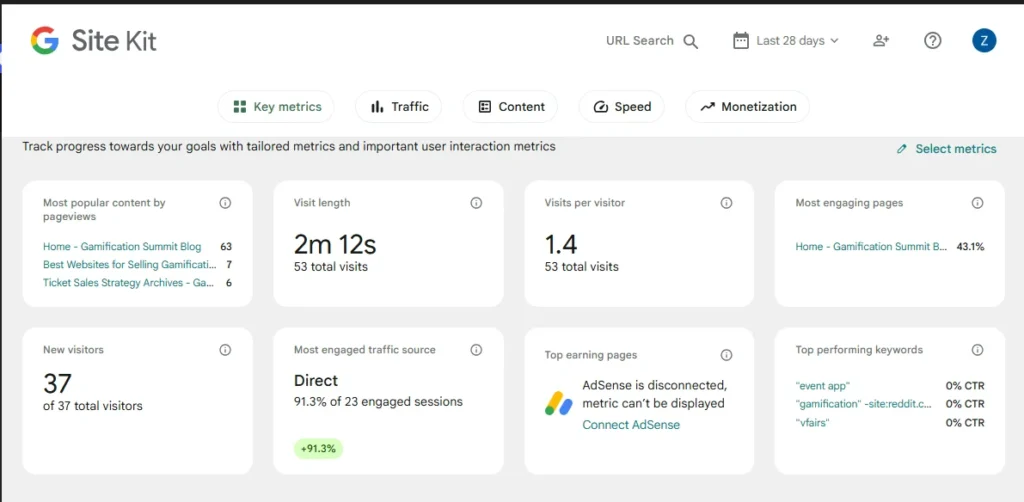
None of the above matters if you’re not tracking whether it’s working. At minimum, track: conversion rate (visitors who actually buy), where buyers are coming from, and where people drop off in checkout. A deeper guide on measuring ticket sale effectiveness with real numbers is planned as a future article on this blog.
For your first event, start with basic tracking. Most ticket platforms already show visitor-to-purchase conversions. They also show where buyers came from. Check your traffic sources regularly. You do not need advanced analytics to find useful insights. You only need to review the data you already have. Many first-time organizers skip this step. Do not make the same mistake.
A Practical Getting-Started Checklist
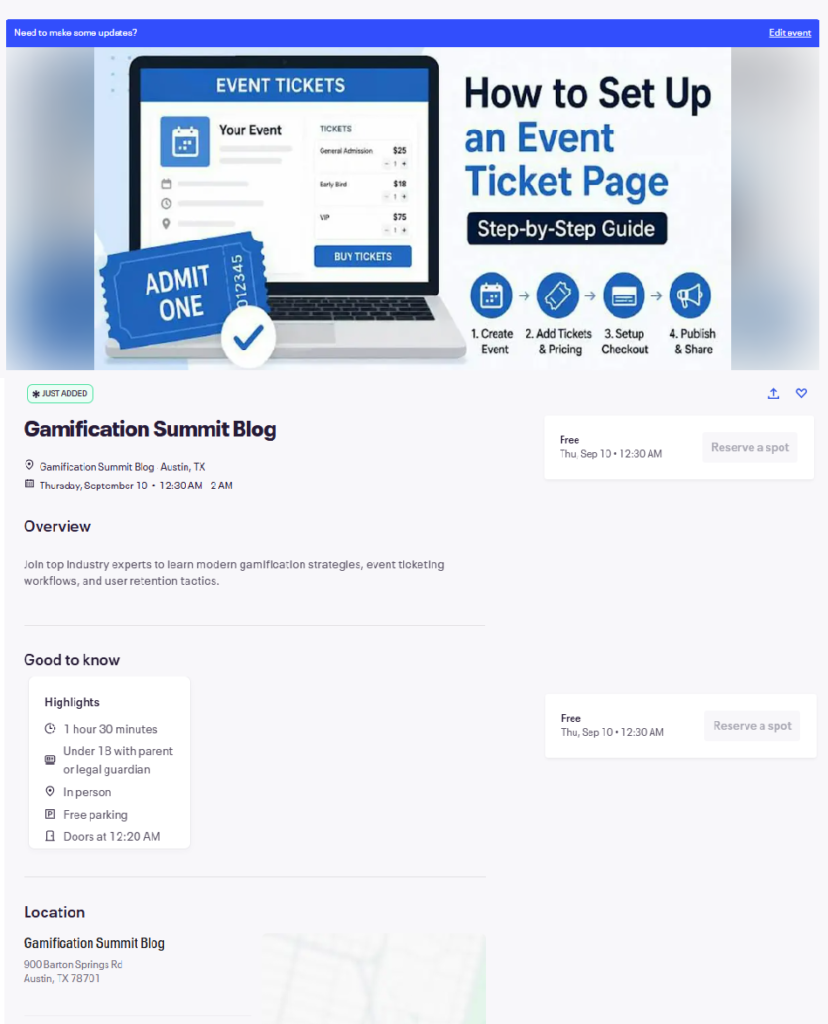
If you’re setting up ticket sales for the first time and want a simple starting sequence rather than trying to optimize everything at once, this is a reasonable order to work through:
- Confirm your platform and payment setup work end to end — test this yourself before anything else, using the process covered in our platform and payment guides
- Set a simple pricing structure — start with one or two tiers rather than five; you can always add complexity later once you understand your audience’s response
- Write a clear, honest event description — avoid vague language; be specific about what’s included
- Plan a short promotion sequence — not just one announcement, but a few touchpoints spaced across your sales window
- Decide what you’ll track — pick 2-3 numbers to watch (conversion rate, traffic source, drop-off point) before you launch, not after
- Launch, then actually check the numbers — don’t set it and forget it; revisit your tracking numbers at least once during the sales window, not just at the end
This sequence deliberately favors getting something working simply over trying to perfect every element before launch. A live ticket page with basic tracking beats a theoretically perfect one that’s still in planning.
What Doesn’t Work (Common Mistakes)
A few patterns worth avoiding:
- Pricing without any research into what similar events charge
- Promoting only once, close to the event, instead of a sustained campaign
- Ignoring mobile checkout experience — a real concern given most buyers purchase from mobile devices
- Adding gamification elements that add friction instead of removing it
- Treating the ticket page as “done” after launch instead of checking how it’s actually performing
Frequently Asked Questions
What’s the single most important factor in ticket sales?
There isn’t one — a smooth checkout process, sensible pricing, and genuine promotion all matter together. Weakness in any one area tends to undercut the others.
Does gamification actually increase ticket sales, or is it just a trend?
Used well — tied to genuine incentives like early-bird recognition or referral rewards — it can meaningfully help. Used as decoration without real incentive behind it, it tends not to move the needle much.
How long before an event should I start selling tickets?
This varies by event size and type, and we’ll cover this in more detail in a dedicated guide. As a general starting point, giving buyers enough lead time to plan (particularly for events requiring travel) tends to outperform short sales windows.
Should I discount tickets if sales are slow?
Do I need a big marketing budget to sell tickets effectively?
Not necessarily. A smaller, more targeted promotion plan aimed at people who are actually likely to attend often outperforms a larger, unfocused one. Budget helps with reach, but relevance and clarity of message tend to matter more for actual conversion.
What’s a realistic first step if I’m overwhelmed by all of this?
Start with the checklist in this guide. Get a working, tested ticket page live with basic pricing and tracking before worrying about optimizing every element — you can’t improve what isn’t launched yet, and early real data will tell you more than more planning will.
Final Thoughts
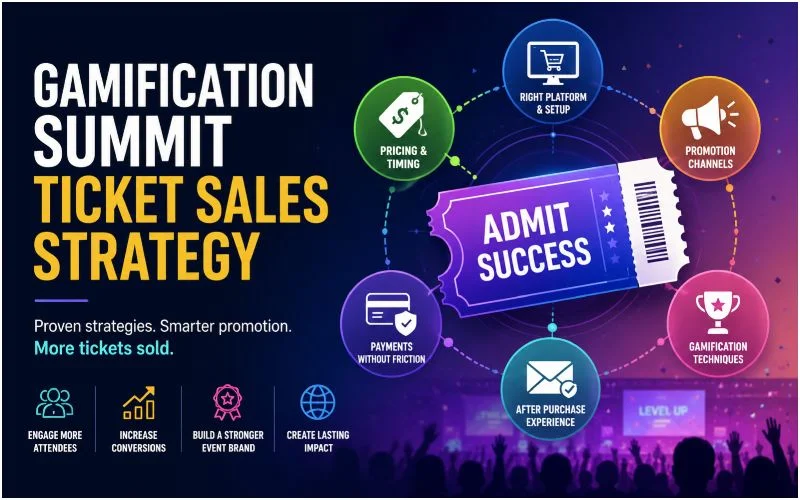
Effective ticket sales for a gamification summit-style event come down to getting several things right at once — platform, payment, pricing, promotion, and measurement — rather than any single tactic. What tends to separate events that sell well from those that struggle isn’t usually one dramatic mistake, but a series of small gaps left unaddressed: a slightly confusing checkout, a pricing tier nobody understands, a single promotional push instead of a sustained one, or no real plan for what happens after someone pays.
None of these individually feels urgent to fix. Together, they add up to the difference between a ticket page that converts and one that quietly underperforms without anyone being quite sure why. The checklist above is a reasonable starting sequence if you’re building this from scratch; if you already have something running, it’s worth working through each section here as a quick audit of what might be worth adjusting.
This page will keep expanding with dedicated guides on each area as they’re published; for now, the Ticket Platforms and Xendit setup guides are the best starting points already live on this blog.
Have a specific question about ticket sales strategy this guide didn’t answer? Get in touch — every message is read personally.
Disclaimer
This article provides general strategy information based on common practices and research. Results vary by event type, audience, and execution. No specific outcome or sales figure is guaranteed by following any method described here.