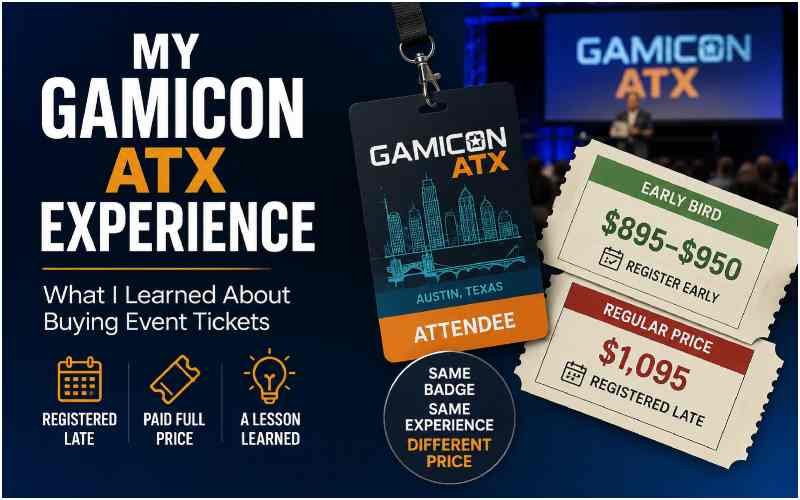
I have bought enough event tickets, including a fairly expensive one for GamiCon ATX, to have a real set of habits around it. None of this is theoretical. Every item below comes from something that actually annoyed me, impressed me, or cost me money at some point.
Before I Even Look at the Price
Date and location come first. If the event does not line up with where I already am or plan to be, nothing else matters. Price is the second thing I check, and only once the price fits my budget do I actually read the agenda closely.
For anything under $30, I do not think twice. For anything above $200, I check the refund and cancellation policy before I go any further. I want to know exactly what happens if a flight gets cancelled or work gets in the way.
What the Event Description Needs to Show Me
I skip long descriptive paragraphs entirely. I am looking for two things specifically:
- The agenda, meaning which hands-on session happens at which time
- What is actually included in the price, such as lunch or networking events
If a page only says something like exciting speakers coming soon, I do not buy. I want to know what session I will be sitting in and what I will walk away having learned before I commit.
How I Check Whether a Platform Can Be Trusted
Basic trust starts with HTTPS and clear billing details, but real trust comes from a checkout that feels clean and professional. If a payment page redirects strangely or throws a popup error, I leave immediately.
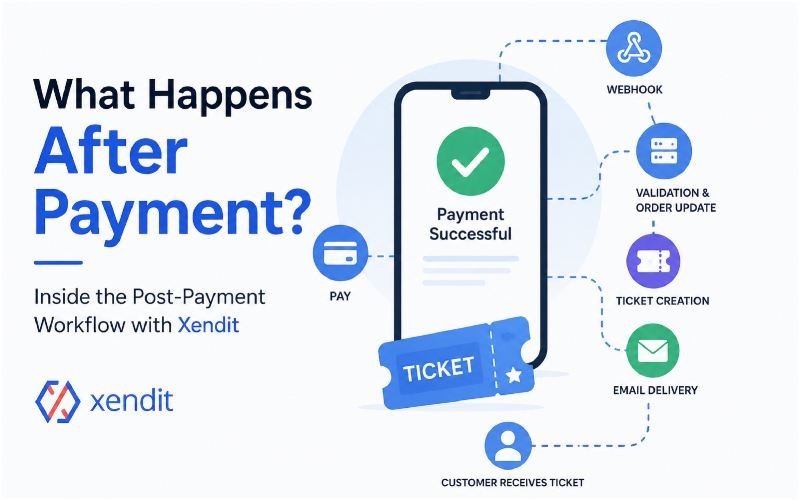
I also look at the payment gateway itself. Familiar, well-designed logos for something like Stripe, PayPal, or Xendit on the payment page are reassuring. Our own real, tested walkthrough of a Xendit integration covers what this looks like from the setup side, which is useful context if you are wondering what a properly configured checkout should feel like.
Reviews matter too, but only independent ones. I do not trust a site showing only its own five-star testimonials. I look on LinkedIn or independent blogs for unpolished, real accounts of what an event was actually like.
What Ruins Checkout for Me
- Hidden fees: seeing a $150 ticket become $170 at the final screen because of a service fee or hidden tax that was not shown earlier
- Unnecessary questions: being asked for a full company address, tax ID, or marketing survey answers just to buy a ticket
- Forced account creation: having to set a password and wait for an email verification code with no guest checkout option
- Slow pages: waiting more than three to five seconds for a page to load before I close the tab
- Losing my progress: a payment failure that wipes out my name, email, and ticket selection, forcing me to start over
Hidden fees are not just annoying, they are a real problem the FTC has taken direct action on, requiring live-event ticket sellers in the US to show the full price upfront rather than adding charges at the final screen. If a platform still buries fees after that rule, it tells you something about how seriously they take their own compliance.
On the payment failure point, I had a genuinely bad experience once where a payment page crashed right after I clicked pay. My bank showed the charge, but no ticket arrived because the backend was not set up correctly. It took five emails to support before it was resolved. That kind of failure tells me more about a platform than any marketing copy does.
What Actually Impresses Me
One-click payment through Apple Pay or Google Pay is the single feature that makes checkout genuinely pleasant. No sixteen-digit card number, no expiry date, just a thumb tap and the ticket is done.
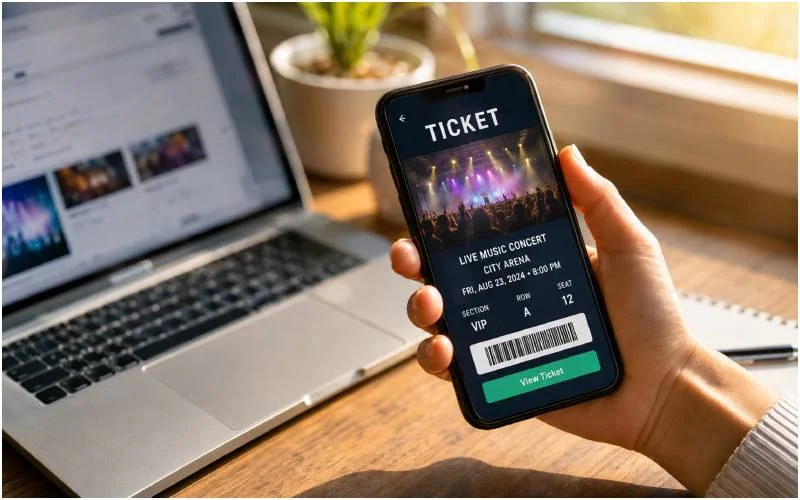
A clear Add to Calendar button right after purchase is a small detail that saves real time later. I also pay attention to how fast the confirmation email arrives. I expect it within sixty seconds of paying, and anything past ten minutes starts to feel like my money might be stuck somewhere.
How I Buy, and How That Shapes What I Notice
I buy from my phone more often than not, and industry research generally puts mobile purchases at around the majority of all ticket sales, which matches my own habit. That means mobile-specific friction stands out to me immediately: input fields that do not respond properly, a keyboard that pushes the pay button off screen, or autofill that simply does not work.
I also expect a full checkout, selection to confirmation, to take under sixty seconds when everything works correctly. A single page checkout beats a multi-step wizard every time, since each extra step is another chance for the process to stall.
A Few Things I Have Strong Opinions About
- Fake urgency: a countdown timer that resets when I refresh the page destroys my trust in the entire platform. A genuine, fixed deadline does the opposite
- Cart expiry timers: ten to fifteen minutes feels fair and gives peace of mind. Two minutes with constant blinking just creates stress
- Group discounts: a real buy-three-get-one offer genuinely gets me messaging colleagues to join, since it feels like a real incentive rather than a gimmick
- Gamified checkout gimmicks: spin-the-wheel discount popups on a professional event page make the whole event feel less credible, not more fun
As someone who writes about what actually makes ticket sales effective, I notice the difference between urgency that reflects a real deadline and urgency manufactured purely to pressure a click. Buyers notice the difference too, even when they cannot immediately explain what felt off.
A Simple Checklist Version
- Date, location, and price fit before anything else
- Refund policy checked for anything over roughly $200
- Agenda and what is included are clearly stated, not vague
- Independent reviews exist somewhere outside the event’s own site
- Payment gateway looks professional and familiar
- Full price shown upfront, no surprise fees at the final screen
- Guest checkout available, no forced account creation
- Confirmation email arrives within minutes, not hours
Frequently Asked Questions
What should I check first before buying an event ticket?
Confirm the date and location work for you, then check that the price fits your budget before reading the full agenda. For anything over roughly $200, check the refund policy before going further.
How can I tell if a ticket-selling platform is trustworthy?
Look for HTTPS, a clean and professional checkout, and a recognizable payment gateway. Independent reviews from LinkedIn or outside blogs matter more than testimonials shown only on the event’s own page.
What is the biggest red flag during checkout?
A price that changes at the final screen. If the total shown at checkout does not match what you saw when you started, treat that as a serious warning sign rather than a minor inconvenience.
Final Thoughts
None of this is complicated, and most of it comes down to one idea: show me exactly what I am paying, exactly what I am getting, and do not waste my time getting there. The events and platforms that get this right earn a repeat buyer. The ones that do not tend to lose me at checkout, regardless of how good the event itself might have been.
If you are choosing a platform to sell tickets on rather than buy them, the full platform comparison guide on this blog covers the seller’s side of these same decisions. Have your own checkout horror story or a platform that genuinely impressed you? Get in touch, and every message is read personally.
Editorial Transparency
Last updated: August 15, 2026
Basis for this article: This checklist reflects personal buying habits and real experiences, including a genuine payment failure with a past purchase, rather than a structured test or documentation review
What this article does not cover: This is one buyer’s criteria, not a universal standard. Individual priorities will vary by budget and event type
Corrections: If anything here needs updating, contact us and it will be corrected