Not every site selling tickets to a summit or conference is what it looks like. Before checking prices or seat availability, the real first question is simpler: is this ticket site legitimate at all. This is not a list of recommended platforms. It is a verification method, built from real fraud cases, for checking any site for Gamification Summit tickets or a similar event before you enter your card details.
Start With the Domain, Not the Design
Scam ticket pages are rarely sloppy. A Memphis buyer paid $220 for what looked like presale tickets to a Khruangbin concert on a professionally designed site pulled together with real event photography lifted from elsewhere online, a pattern the Better Business Bureau’s warning on fake festivals and phony tickets has tracked repeatedly. Design quality tells you nothing about legitimacy.
One useful check is whether the site appears outside the ad that led you there. Check if the venue lists the event on its own site. Also check the organizer’s official channels for the event. A recently registered domain does not prove a scam. Legitimate new events often launch new websites. However, other problems can make a new domain risky. These include missing organizer details and no independent event listing. Pressure to pay immediately also raises concern. A site that exists only through an ad deserves extra caution. The risk grows when no other source confirms the event.
Check Where the Conversation Is Happening
A West Virginia buyer found a seller through a Facebook group. The seller claimed to be a verified ticket seller. They promised to transfer tickets through Ticketmaster after payment cleared. The buyer sent $1,380 for the tickets. Soon after, the seller demanded another payment. They called it a “transfer fee.” Ticketmaster does not use this fee in its standard transfer process.
Legitimate ticket sites for conferences and summits do not run their sales through Facebook group direct messages, Nextdoor posts, or Craigslist listings. If the “purchase” is happening in a chat thread instead of on the platform’s own checkout page, that is not a ticket site. That is a person pretending to be one.
Screenshots Are Not Proof of Anything
An Oakland buyer sent $320 over Apple Pay to a seller who had shared screenshots of tickets as proof they were real, a case now on record with BBB Scam Tracker. The seller then claimed the payment failed and sent a fake payment-reversal notice, prompting the buyer to pay again through Chime. Only after both payments cleared did the seller invent a new excuse.
A screenshot proves a seller has an image editor. It proves nothing about ownership of a ticket or the existence of a working account on the actual platform. A legitimate ticket website lets you complete the transaction and receive confirmation directly through its own checkout system, not through a photo someone sent you first.
Look for Buyer-Limit and Resale Manipulation
Some fraud does not come from a random scammer at all. It comes from the platform’s own structure being gamed at scale. The FTC brought a case against a ticket broker operating as “Smart Scalpers,” detailed in the FTC’s press release on the Elite Events settlement, which used automated tools to bypass ticket-purchase limits across more than 2,400 shows over a seven-month span, then resold those tickets at a markup. The settlement reached over 10.7 million dollars once penalties were combined.
A related case involved a Maryland reseller that spent $57 million on about 380,000 tickets. The reseller then resold those tickets for $64 million. It earned over $1.2 million from one tour alone. In April 2026, a federal judge sided with the FTC. The court confirmed that the scheme violated the Better Online Ticket Sales Act.
For a summit or conference specifically, this pattern shows up as third-party sites that appear to sell “guaranteed” tickets before the organizer has opened public registration. If a ticket site is offering conference passes ahead of the event’s own announced sale date, that gap is worth questioning before the price does. It is worth comparing this against what actually makes gamification summit ticket sales effective and how legitimate ticket-selling sites structure their sales tactics, since the honest version of urgency looks very different from the manufactured kind.
Even Major Platforms Are Not Automatically Safe
Ticketmaster and Live Nation are currently facing an FTC lawsuit, joined by seven states, over bait-and-switch pricing: advertising lower prices than what buyers end up paying, and claiming strict per-buyer ticket limits that brokers were, in practice, routinely allowed to exceed. That case remained pending as of mid-2026.
This does not mean avoid Ticketmaster. It means brand recognition alone is not a verification method. The safest habit is checking the event’s own official page for which platform it has authorized, rather than assuming any well-known ticket brand is automatically the correct or safest option for that specific event. For a closer look at how individual platforms compare once you have confirmed legitimacy.
A Short Verification Checklist
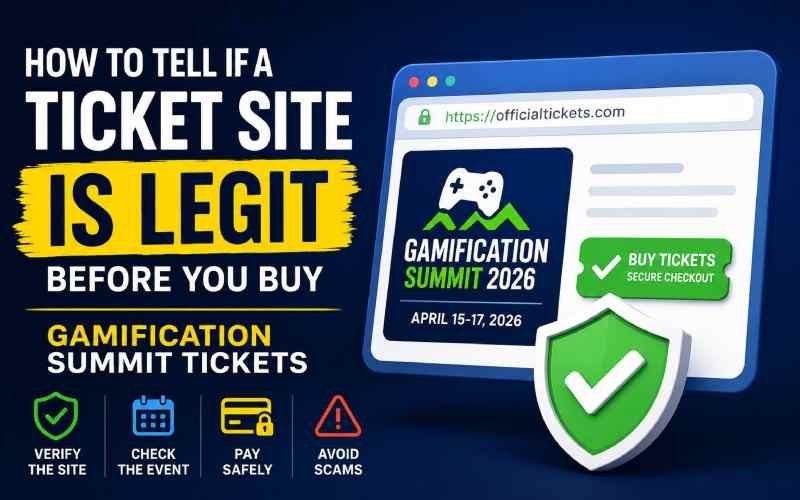
Before buying tickets to a summit, conference, or similar event from any site, four checks take less time than the checkout process itself:
- Confirm the event is listed on the organizer’s own official website or announcement channel, not only on the ticket site itself.
- Complete the purchase through the platform’s own checkout page, never through a link sent in a chat, group, or direct message.
- For unfamiliar sellers, avoid sending money through person-to-person transfers or payment methods that offer limited purchase-dispute protection. When available, paying by credit card can provide stronger protections for eligible transactions.
- Treat an unexpected second payment request as a major warning sign. In documented ticket scams, scammers often invent transfer fees, verification charges, or other last-minute reasons to demand more money after the initial payment clears.
If You Already Paid a Fake Site
File a chargeback with your card issuer immediately if you paid by credit card. Report the site at reportfraud.ftc.gov, and at ic3.gov if it involved a fake website crossing state lines. File a report at BBB.org/ScamTracker as well. This is where the specific cases referenced in this article became public record, and it is how the next buyer gets a warning before they pay. If you paid through a legitimate platform and the event itself gets cancelled or delayed, what happens after an event payment, including webhooks, ticket delivery, and refunds walks through that process separately from outright fraud.
Editorial Note
This article uses real cases filed with the FTC and BBB Scam Tracker. We do not rely on summaries from other blogs. The article has no sponsorship from any company. Ticketing platforms did not pay for placement. Payment apps did not pay for placement. Services did not pay for inclusion or affiliate revenue. We mention platforms only when sourced cases name them. Their inclusion does not mean we recommend or criticize them. We report each sourced case clearly and fairly.
If any detail in this article is later found to be outdated or incorrect. It will be corrected as soon as it is verified.